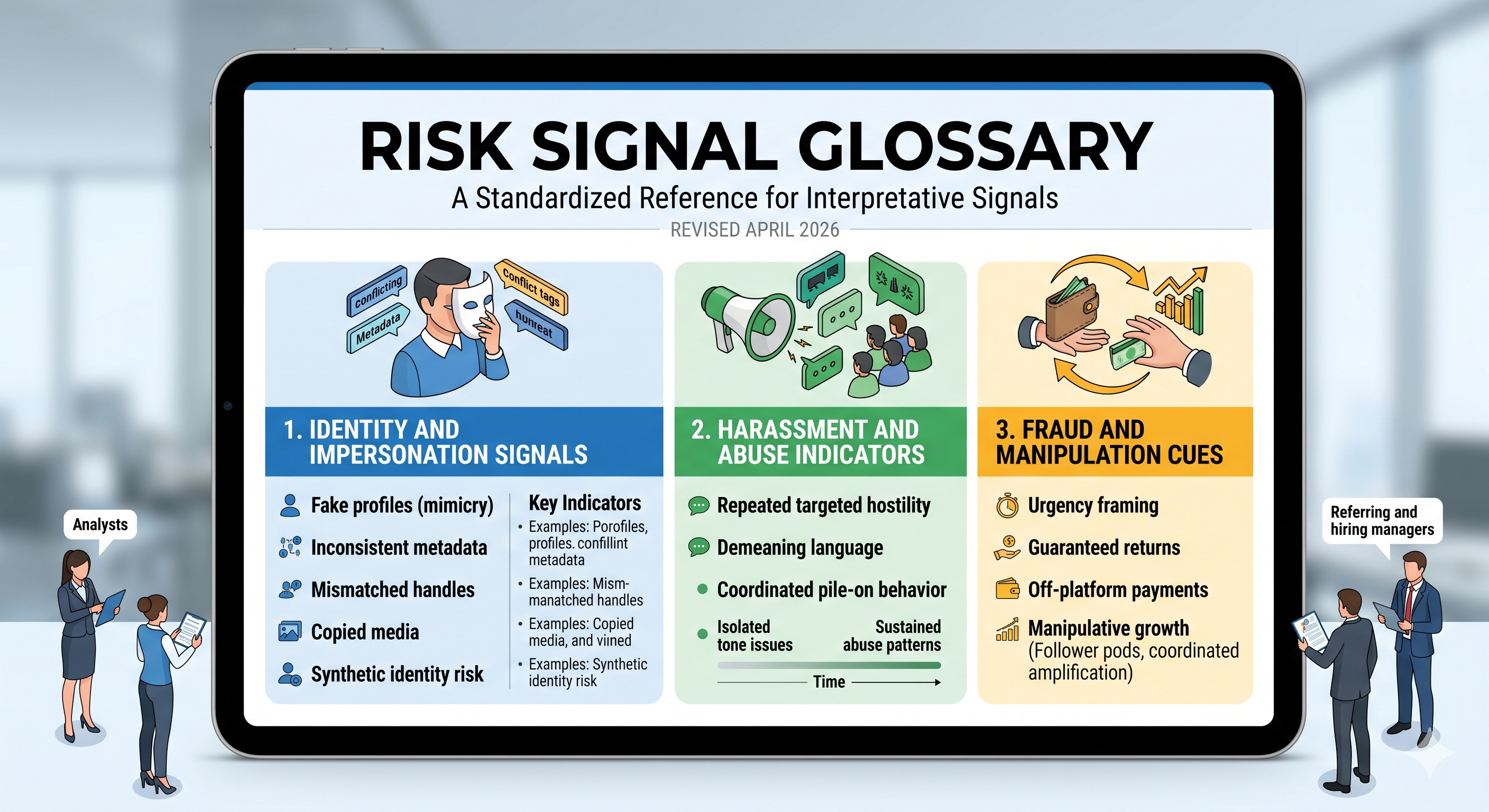
Identity and impersonation signals
Impersonation includes fake profiles that mimic a public figure, brand, or colleague to gain trust. Key indicators are inconsistent metadata, mismatched handles, and copied media.
Synthetic identity risk appears when biographical claims, profile history, and interaction patterns do not align over time.
Harassment and abuse indicators
Look for repeated targeted hostility, demeaning language directed at protected groups, and coordinated pile-on behavior.
Differentiate isolated tone issues from sustained abuse patterns by reviewing cadence, audience, and escalation over time.
Fraud and manipulation cues
Common fraud cues include urgency framing, guaranteed returns, off-platform payment requests, and rotating wallet or payment endpoints.
Manipulation signals include engagement pods, coordinated amplification, and inauthentic follower-growth patterns.