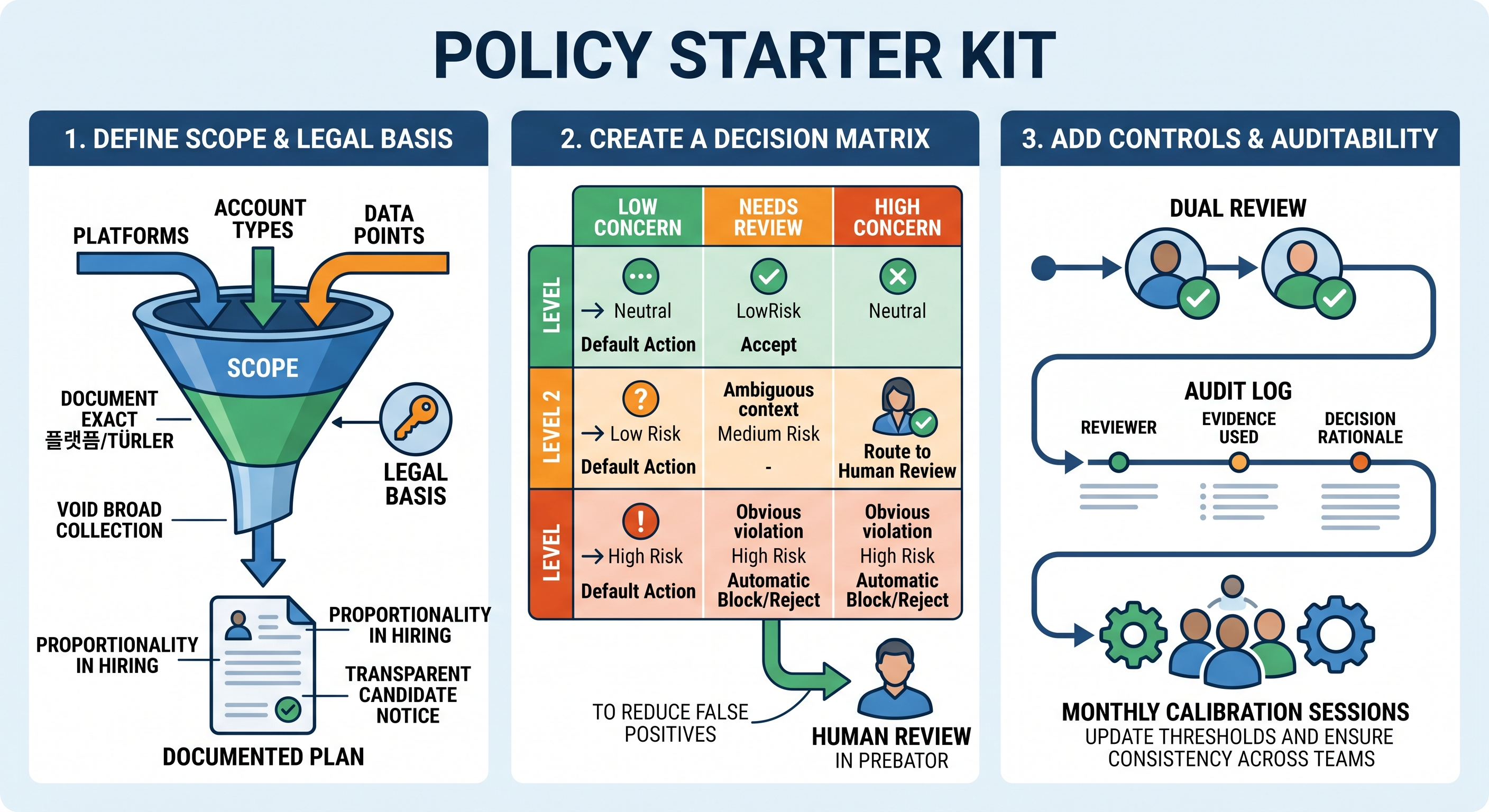
Define scope and legal basis
Start by documenting exactly which platforms, account types, and data points can be reviewed. Keep this tied to role requirements and avoid broad collection.
For each use case, map the legal basis for processing and retention limits. In hiring, this often means relevance, proportionality, and transparent candidate notice.
Create a decision matrix
Build a matrix with three levels: low concern, needs review, and high concern. Each level should include clear examples and a default action.
Avoid binary pass/fail logic for ambiguous context. Route medium-risk findings to human review to reduce false positives.
Add controls and auditability
Require dual review for high-impact decisions. Track who reviewed, which evidence was used, and why a decision was made.
Schedule monthly calibration sessions so reviewers apply policy consistently and update thresholds when risk patterns change.